
Toyota Systems contributes to establishing a large-scale parts center with comprehensive Material Handling Equipment
Toyota Systems provided support in system development and operations when launching the “Oguchi Parts Center No. 2,” the new supply center to be established in 43 years, which was opened in 2021 in Niwa District, Aichi Prefecture.
Toyota Systems has continuously supported supply site operations based on the Toyota Production System (TPS) by pursuing initiatives such as just-in-time receiving and shipping to minimize inventory and improving the filling efficiency of parts storage equipment.
The Oguchi Parts Center No. 2 is the first Toyota supply center to introduce comprehensive material handling equipment. It also focuses on addressing social issues such as labor shortages, driver shortages, and the creation of a comfortable working environment.
At this new supply center, in addition to material handling equipment, the installation of A-TOP, led by Toyota Systems, has ensured high system quality, flexible manpower and improved working conditions.
- Material handling: A term referring to handling the movement and storage of products and goods at distribution bases and similar facilities
01. Toyota Systems Initiatives
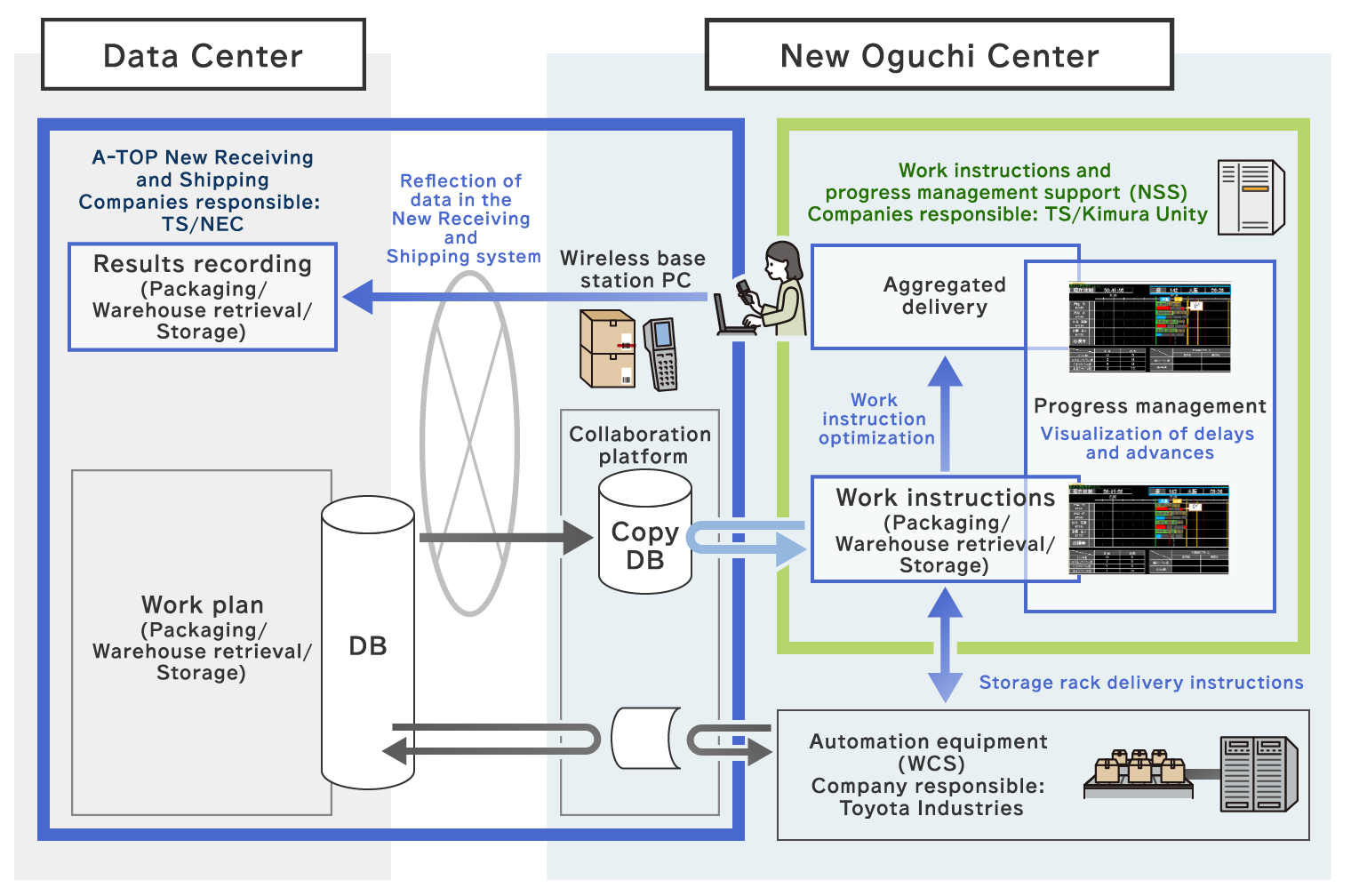
Achieving collaboration among four companies and three systems, the core of new center operations
Toyota Systems was responsible for planning, work instructions and performance management related to inbound and outbound operations within the system configuration that serves as the core of the Oguchi Parts Center No. 2.
This center is consisted of three collaborated systems between four companies: NEC, Kimura Unity, Toyota Industries and Toyota Systems. We needed to understand of the objectives and roles of the three different systems to capture the overall picture, and determine what information sharing was required.
Toyota Systems applied this extensive know-how accumulated through years of supporting Toyota group supply sites, along with its thorough understanding of the systems to selectively manage shared information, ensuring smooth system integration.
Defect correction testing performed in close collaboration with users
During system testing, we were stationed at the Parts Center to observe and verify actual operations on-site, to ensure that there were no overlook in the business process patterns.
Furthermore, to improve quality, we interviewed users to clarify any uncertainties or questions. As a result, we received praise from users for the high quality of the system at the time of user testing.
Leading for each system and promoting system development with close support for users
This center serves as the starting point for on-site system operations with the core system “A-TOP New Receiving and Shipping,” managed by Toyota Systems. Therefore, we took the lead in planning the system operation schedule for equipment trials and coordinating the preparation of the execution environment.
In order to develop a system that goes beyond merely introducing automated equipment and aims to drive supply chain innovation, we conducted on-site practical verifications and actively promoted development by incorporating feedback from field users. As a result, we proposed systems with a strong focus on user operations from the requirements definition phase onward.
- A-TOP:All-TOyota Parts System
- NSS: NyuShukka SagyoShiji System (Receiving and shipping work instruction system)
- WCS:Warehouse Control System
02. Toyota Systems Initiatives
Develop data connectivity functions with automation equipment to support workforce reduction and enhance workplace environment.
One of the objectives of the Oguchi Parts Center No. 2 project is to pursue flexible manpower through the introduction of automated equipment. Toyota Systems also provides support for equipment implementation to realize the on-site vision described by Toyota.
Support for the development of automation in transport, including filling/sorting operations in shipping
The new center uses automated guided vehicles (AGVs) to transport shipping items and features an automated system for sorting small filler items during packing.
Toyota Systems utilized its know-how of A-TOP, the core supply system, and performed development from implementation planning through actual development.
The information integration function we developed receives requests from the AGV moving to the packaging area, calculates and selects the small item to fill gaps based on part volume and type, and issues dispatch instruction to the packaging area.
By automating transport and small-item selection tasks previously handled manually, which were previously performed by people, we have achieved labor reduction and increased packing efficiency.
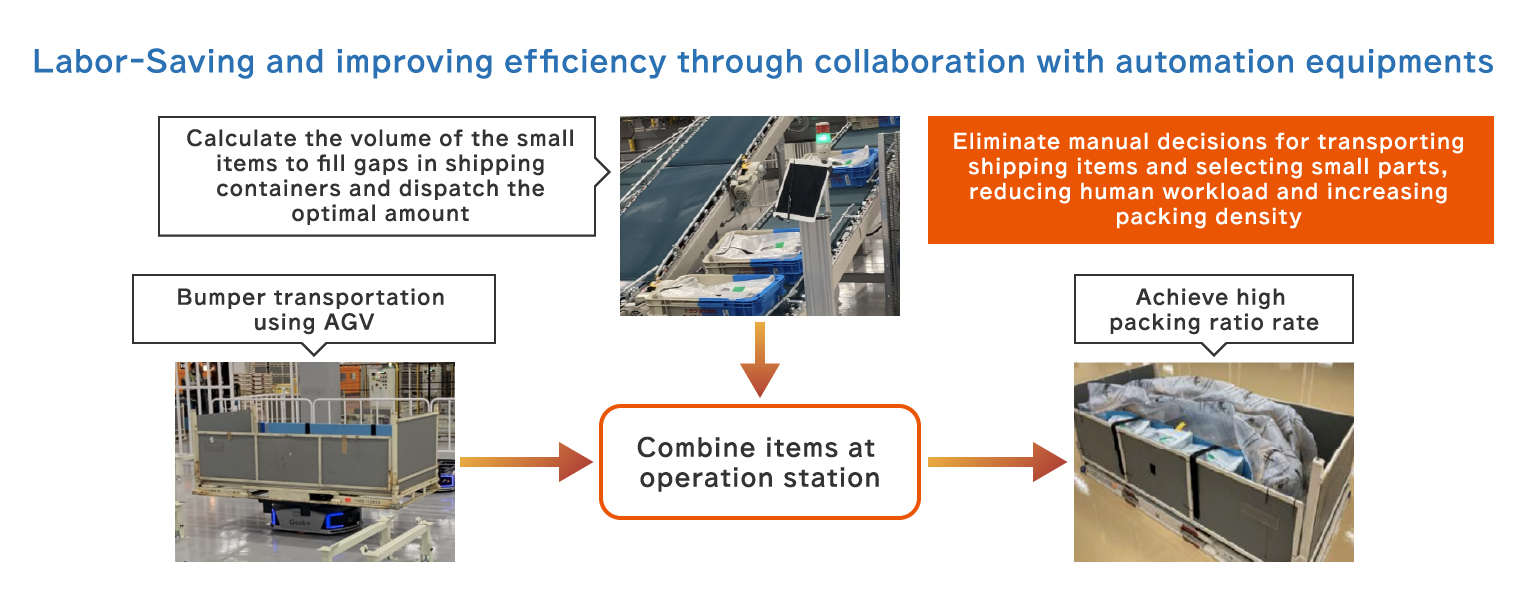
A-TOP←→WCS collaboration
Introduce barcode scanning cameras on conveyer belts to automate shipping item and data linkage.
The barcodes on the items to be shipped were previously read using scanners and handheld terminals. We advanced this to automatic operations where the information is scanned using a camera installed at the point where items are fed onto the conveyer belt.
By linking all the information and shipping destinations with the quipment itself, it is now possible to link the information required for transport within the equipment.
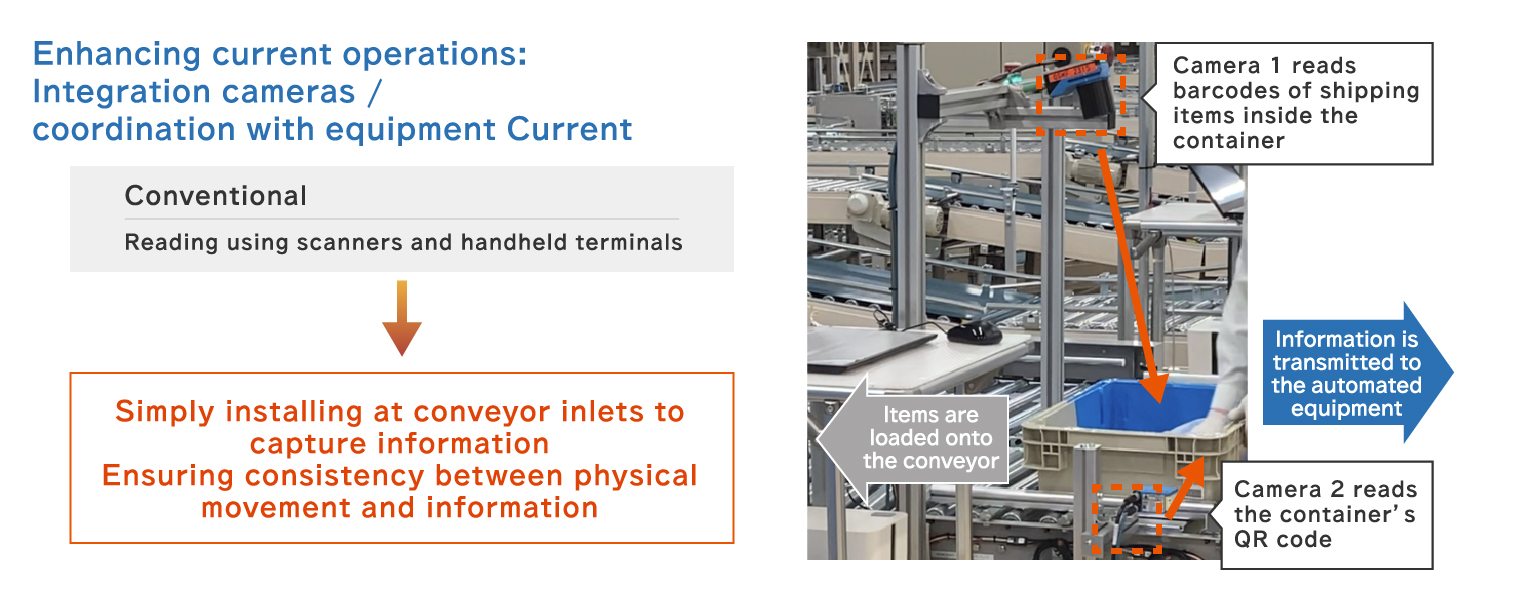
A-TOP ←→ NSS Collaboration
Implement work plans and management linked to truck delivery and shipment volume.
It is difficult to create advance work plans for supply part due to reasons such as the need to respond to daily orders and coordinate with the truck delivery services. We supported the systemization of these tasks.
We multiplied the Toyota's TPS concept and the knowledge of Kimura Unity, who is in charge of on-site operations and the knowledge of Toyota Systems. This made it possible to perform work planning based on specific figures such as shipping volumes, work hours and traffic lines, and this achieved the visualization of the delays and degree of progress towards planning.
On the other hand, we have started to observe issues related to response accuracy where multiple factors are involved, such as orders, delivery, and progress. Toyota Systems is commited to improving system accuracy and will continue to strive for further enhancements.
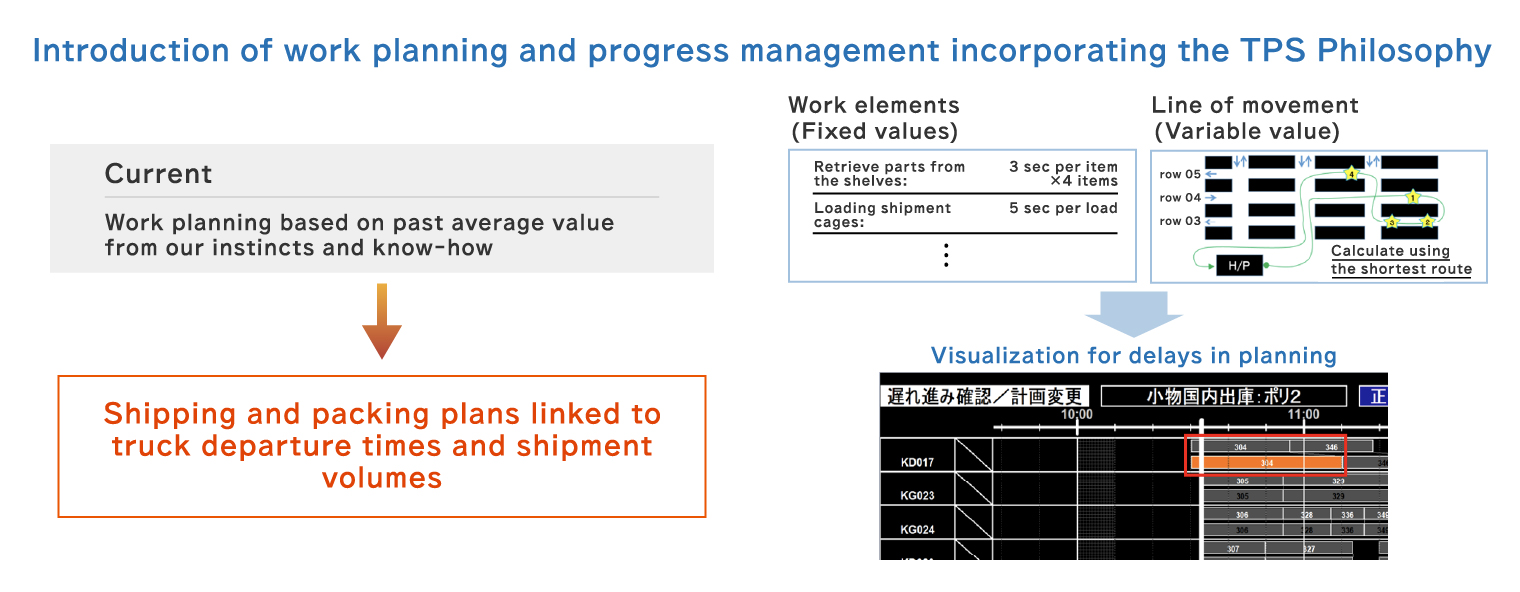
- A-TOP:All-TOyota Parts System
- NSS: NyuShukka SagyoShiji System (Receiving and shipping work instruction system)
- WCS:Warehouse Control System
We address social issues through the unique Toyota Systems’ technologies combined with IT.
Toyota Systems is able to provide innovative system development support like this based on our expertise in vehicle development. This includes our unique expertise in tool development, operational experience, and know-how accumulated as a IT professional.
Toyota Systems will continue its efforts to resolve various social issues, such as eliminating human resource shortages and creating a wellbeing-oriented society through its unique approach.